
Schuyler Community Schools · Annual Report 2024–2025

Building a District
Worth Belonging To

A report on our schools, our students, and our progress

Escuelas Comunitarias de Schuyler · Informe Anual 2024–2025

Construyendo un Distrito
donde Todos Pertenecen

Un informe sobre nuestras escuelas, nuestros estudiantes y nuestro progreso

BelieveCreer
BuildConstruir
BelongPertenecer
In this report En este informe
Academic Excellence
Academic ExcellenceExcelencia Académica
Raising the Bar for English LearnersElevando el Nivel para los Estudiantes de Inglés
Read story ↓Leer historia ↓
Student Life
Student LifeVida Estudiantil
Finding Their Place: New Clubs Creating ConnectionEncontrar su Lugar: Nuevos Clubes que Crean Conexión
Read story ↓Leer historia ↓
student advanced learning
Academic ProgramsProgramas Académicos
Expanding Pathways: Advanced LearningAmpliando Caminos: Aprendizaje Avanzado
Read story ↓Leer historia ↓
student advanced learning
By the NumbersEn Números
District Data & Financial ReportDatos del Distrito e Informe Financiero
See the data ↓Ver los datos ↓
A Message From the Superintendent
Dr. Bret Schroder, Superintendent
Dr. Bret Schroder
Superintendent,
Schuyler Community Schools

Schuyler Community,

When I came to Schuyler Community Schools, I knew I was stepping into a district with good kids, committed staff, and a community that cares deeply about its schools. That was obvious from day one.

What wasn't as obvious was how much work needed to happen behind the scenes to ensure the systems supporting students and staff were strong, consistent, and fair. Over the last two and a half years, that has been the focus of our work.

Our theme this year for the district is Build, Believe, Belong. It goes beyond a slogan or a phrase on a shirt. It reflects what we are actively trying to do as a school district — build strong systems, believe in all students, and create a place where students, families, staff, and community members know they belong.

This annual report is meant to give you a clear look at that work and the direction we are moving.

Building What Lasts

One of the first priorities was structure. Without clear systems and consistent expectations, even the best intentions fall apart. In the past, too many things depended on who you asked, where you were, or how something had "always been done."

That doesn't work for kids.

We have focused on building systems that are consistent, transparent, and fair — especially in finances, safety, and day-to-day operations. This wasn't optional work, and it wasn't comfortable work, but it was necessary.

Financially, the district is in a much stronger position than when I arrived. We tightened controls, clarified approval processes, improved how spending is tracked, and rebuilt reserves. Today, we know where money is going, why it's being spent, and how it supports students. This community deserves to know its investment in schools is being handled responsibly.

Building strong systems isn't about control. It's about trust. When expectations are clear and applied consistently, people know where they stand. That's good for staff, good for families, and ultimately good for students.

Belief Shows Up in Expectations

I believe deeply in the students of Schuyler Community Schools. Belief without structure doesn't help anyone.

If we truly believe students can succeed, we must be honest about where we need to improve and disciplined about how we address it. That's why we've sharpened our focus on academic consistency, reading achievement, and English Language Development.

For too long, we accepted outcomes that didn't match our graduation rates or our expectations. This isn't about blaming students or staff. It's about recognizing the system wasn't aligned — and fixing it. We are using data to guide decisions, aligning curriculum and instruction, and ensuring expectations are consistent across buildings.

Our work with English Learners is a key part of this effort. We are building systems that support students from the moment they enter our district and throughout their time with us. This takes time and patience, but it also takes belief — belief that our students can grow, and belief that the system must do its part.

Belief also means supporting educators. Clear direction, consistent leadership, and meaningful professional learning allow teachers to focus on what they do best: teaching students well.

Belonging Is Built on Opportunity

Belonging doesn't happen automatically. It happens when students feel connected, supported, and valued.

Across the district, we are expanding opportunities that help students find their place — academically, socially, and through activities that matter to them. Clubs like FBLA and eSports aren't "extras." They build confidence, create leadership opportunities, and help students connect to school in meaningful ways.

Belonging also means communication that reaches families where they are. That's why this report is presented in both English and Spanish. When families understand what's happening in their schools, they can be true partners in their children's education.

A district where people feel they belong is a district people invest in — with their time, their trust, and their support.

Fisher's School and Making Hard Decisions

Some of the most difficult decisions are the ones tied to people's memories and emotions, not just numbers on a page. The decision regarding Fisher's School is one of those.

Fisher's School is open this year and will remain open through the end of the school year. This is its final year of operation.

This decision followed the same framework used last year when the district closed Richland. In both cases, the guiding questions were the same: Is this decision best for students? And is it best for the district as a whole?

At Fisher's, enrollment has continued to decline while cost per student has increased significantly. At the same time, we have space, staff, and resources in our in-town schools that allow us to provide broader academic opportunities, more services, and stronger peer connections.

This decision was not about one group of families versus another. It was about equity, safety, and long-term sustainability. Resources should be allocated based on student need, not geography, and all students deserve access to the same opportunities.

I understand the emotion tied to Fisher's School. Its history matters, and the people connected to it matter. Our responsibility now is to ensure students transition successfully and are supported as they continue their education within the district.

These decisions are never easy. But avoiding hard choices doesn't serve students — and it doesn't build a strong district.

Moving Forward Together

Schuyler Community Schools is not a finished work. There is still progress to be made, and we will continue to be honest about that. But we are moving in the right direction.

We are building systems that last. We are setting expectations that reflect our belief in students. And we are creating a district where people know they belong.

This report highlights pieces of that work. It reflects the commitment of our staff, the resilience of our students, and the support of our community.

Thank you for trusting us with your children and your investment in Schuyler Community Schools. We take that responsibility seriously, and we will continue doing the work required to earn that trust every day.

Dr. Bret Schroder Superintendent, Schuyler Community Schools
Un Mensaje del Superintendente
Dr. Bret Schroder, Superintendente
Dr. Bret Schroder
Superintendente,
Schuyler Community Schools

A la Comunidad de Schuyler,

Cuando llegué a Schuyler Community Schools, supe desde el primer día que estaba entrando a un distrito con buenos estudiantes, personal comprometido y una comunidad que se preocupa profundamente por sus escuelas.

Lo que no era tan visible era cuánto trabajo debía hacerse detrás de escena para asegurar que los sistemas que apoyan a nuestros estudiantes y a nuestro personal fueran sólidos, consistentes y justos.

Nuestro tema este año como distrito es Construir, Creer, Pertenecer. No es solo un lema ni una frase en una camiseta. Refleja lo que estamos haciendo todos los días: construir sistemas fuertes, creer en todos los estudiantes y crear un distrito donde todos saben que aquí pertenecen.

Construir lo que Perdura

Uno de los primeros retos que enfrentamos fue la falta de estructura y consistencia. Cuando no existen sistemas claros ni expectativas compartidas, incluso las mejores intenciones fallan. Nos hemos enfocado en construir sistemas que sean consistentes, transparentes y justos — especialmente en finanzas, seguridad y operaciones.

Hoy, el distrito se encuentra en una posición financiera mucho más sólida. Hemos fortalecido los controles, aclarado los procesos de aprobación, mejorado la forma en que se rastrean los gastos y reconstruido nuestras reservas.

Creer se Demuestra con Expectativas

Creo profundamente en los estudiantes de Schuyler Community Schools. Por eso hemos enfocado nuestro trabajo académico en la consistencia, la lectura y el desarrollo del idioma inglés. Estamos corrigiendo eso utilizando datos para guiar decisiones, alineando currículo e instrucción.

Pertenecer se Construye con Oportunidades

El sentido de pertenencia no ocurre por accidente. Se construye cuando los estudiantes se sienten apoyados, conectados y valorados. Programas como FBLA y eSports no son solo actividades extracurriculares — ofrecen liderazgo, confianza y una conexión real con la escuela.

Avanzando Juntos

Schuyler Community Schools no es una obra terminada. Aún hay trabajo por hacer, y seguiremos siendo honestos al respecto. Pero estamos avanzando en la dirección correcta. Gracias por confiar en nosotros la educación de sus hijos.

Dr. Bret Schroder Superintendente, Schuyler Community Schools
Academic Excellence

Raising the Bar for English Learners
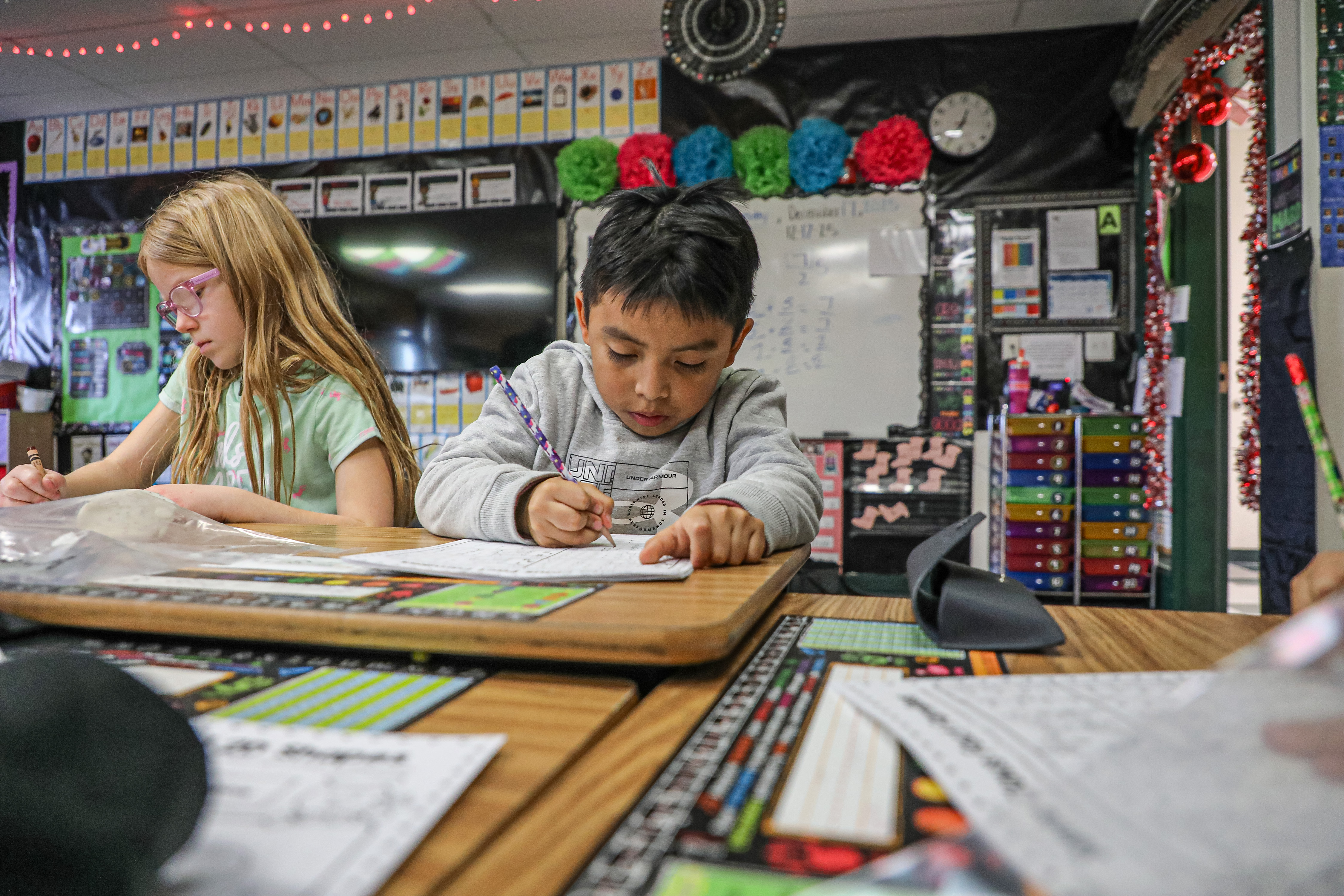
Classroom

Schuyler Community Schools is in the midst of a significant academic reset — one focused less on quick fixes and more on building consistent, sustainable systems that serve every student well.

At the center of the work is a districtwide effort to strengthen instruction for English Learners (EL), improve consistency across schools, and hold adults accountable for student growth. This year, the district brought in Dr. Jo Guzmán, a nationally recognized expert in English Learner education, to work directly with district leadership, principals, and instructional staff.

According to Superintendent Dr. Bret Schroder, the decision to bring in outside expertise was deliberate. "Our data made it clear where we needed to focus," Schroder said. "If we want better outcomes for students, especially our English Learners, we have to strengthen the system around them."

A System-Level Reset, Not a Classroom Fix

Dr. Guzmán, founder of New Horizons in Education, has spent decades helping school systems improve outcomes for multilingual learners. In Schuyler, her role is not centered on individual classrooms or one-time professional development sessions. Instead, she is guiding a yearlong process that begins with leadership.

"The onus for English language growth is not on the student. It is on the system." — Dr. Jo Guzmán

Since the start of the school year, Guzmán has worked closely with district administrators and building leaders to review student data, examine instructional practices, and evaluate how policies and procedures affect English Learners across grade levels. Her work focuses on aligning curriculum, instruction, and assessment with state and federal requirements while ensuring those systems reflect the cultural and linguistic realities of Schuyler's students and families.

"This work is about consistency," Guzmán said. "When systems vary from building to building or classroom to classroom, students feel that inconsistency first."

Why Leadership Comes First

One defining feature of the district's approach is that administrators are engaged in the process before changes reach classrooms. District leaders say that alignment is essential. "When leaders walk the walk first, it builds clarity and trust," Guzmán said. "Teachers deserve to know the system supporting them is intentional, informed, and grounded in evidence."

Samantha Ladwig, Director of Curriculum, Instruction, and Assessment, said the shift has already changed how the district views student data. "In the past, we leaned heavily on test scores alone," Ladwig said. "Now we're looking deeper at individual student histories — where students started, how long they've been with us, and what their experiences have been."

That shift has brought renewed focus to a longstanding challenge: students who enter Schuyler schools in early grades but remain classified as English Learners years later. "These are our Long-Term English Learners," Ladwig said. "Our students deserve a consistent English Language Development program that supports language growth alongside grade-level learning."

What This Means in Classrooms

At the building level, principals say the work is already shaping how instruction is discussed and planned. Elementary Principal Bill Comley said the district's renewed focus on English Learners reflects both student need and instructional responsibility. "With the number of EL students we serve, this has to be a priority," Comley said. "The biggest shift has been paying attention to the details — how students learn at home, how families engage with school, and how we adapt instruction to meet students where they are."

Comley said students may not notice dramatic changes in their daily routines, but they will experience differences in how lessons are delivered and how learning connects to their lives. "The content is still there," he said. "What's changing is how we approach students and support language development."

The Educator Perspective

For teachers working directly with English Learners, the changes address gaps that have existed for years. Rod Ruybalid, an English Learner teacher at Schuyler Middle School, said students often received strong support in early stages of language learning, but that structure faded as they progressed. "Once students moved past the beginning levels, support dropped off," Ruybalid said. "That made it harder for them to keep growing and to see the purpose behind the assessments."

He said the current work brings needed clarity. "With Dr. Guzmán's background, the focus is on building systems that work," Ruybalid said. "It's about setting expectations and helping students and families understand the goal is proficiency."

What Families Can Expect

District leaders emphasize the work underway is intentional and long-term. "This won't result in overnight change," Ladwig said. "But it will result in stronger, more sustainable systems if we do it right." Over time, families may notice students using more complete sentences, showing stronger literacy skills, and making clearer connections between school and home. Leaders also hope families will hear students talking more openly about their goals and progress.

For Schroder, the work reflects a broader responsibility. "Our job is to make sure every student leaves our district prepared," he said. "What they choose to do with those opportunities is up to them — but limiting those opportunities because we didn't build the right systems isn't acceptable."

Excelencia Académica

Elevando el Nivel para los Estudiantes de Inglés

Salón de clases

Schuyler Community Schools se encuentra en medio de un reinicio académico profundo — uno que los líderes del distrito describen no como una solución rápida, sino como un esfuerzo serio por construir sistemas consistentes y sostenibles que sirvan bien a todos los estudiantes.

En el centro de este trabajo está una iniciativa a nivel distrito enfocada en fortalecer la instrucción para los estudiantes que aprenden inglés, asegurar coherencia entre escuelas y establecer una responsabilidad clara para el crecimiento académico. El distrito contrató a la Dra. Jo Guzmán, una experta reconocida a nivel nacional en educación para estudiantes multilingües, para trabajar directamente con el liderazgo del distrito, directores y personal docente.

Según el superintendente Dr. Bret Schroder, traer a una experta externa no fue una decisión simbólica, sino estratégica. "Los datos nos mostraron claramente dónde necesitábamos enfocarnos," dijo Schroder. "Si queremos mejores resultados para los estudiantes — especialmente para quienes están aprendiendo inglés — tenemos que fortalecer primero el sistema que los rodea."

Un Reinicio del Sistema, No una Solución Aislada

La Dra. Guzmán, fundadora de New Horizons in Education, ha trabajado durante décadas con distritos escolares en todo el país para mejorar los resultados de estudiantes multilingües. En Schuyler, su trabajo no se limita a capacitaciones aisladas ni a observar aulas específicas. Su enfoque comienza con una idea clara: la responsabilidad no recae en el estudiante, sino en el sistema.

"El crecimiento en el idioma inglés no es responsabilidad del estudiante. Es responsabilidad del sistema educativo crear las condiciones adecuadas para que ese crecimiento ocurra." — Dra. Jo Guzmán

Desde el inicio del año escolar, Guzmán ha trabajado estrechamente con líderes del distrito y directores de escuela para revisar datos estudiantiles, analizar prácticas de instrucción y examinar cómo las políticas y los procesos afectan a los estudiantes que aprenden inglés en todos los niveles de grado. Este trabajo incluye una revisión profunda de programas, currículo, evaluaciones y procesos de identificación y apoyo, asegurando que estén alineados con los requisitos estatales y federales, pero también con la realidad cultural y lingüística de las familias de Schuyler.

"Cuando los sistemas cambian de una escuela a otra o de un salón a otro, quienes más sienten esa inconsistencia son los estudiantes," dijo Guzmán. "La coherencia no es opcional."

Por Qué el Liderazgo Va Primero

Una de las características más importantes de este proceso es que el trabajo comenzó con los administradores antes de llegar a las aulas. En lugar de pedir a los maestros que cambien prácticas sin una base clara, el distrito está asegurando que el liderazgo comparta un lenguaje común, expectativas alineadas y una comprensión profunda del porqué detrás de cada decisión.

"Cuando los líderes hacen este trabajo primero, se construye claridad y confianza," explicó Guzmán. "Los maestros merecen saber que el sistema que los apoya es intencional, reflexivo y basado en evidencia."

Para Samantha Ladwig, directora de Currículo, Instrucción y Evaluación, este enfoque ya ha cambiado la forma en que el distrito analiza el progreso estudiantil. "Antes dependíamos casi exclusivamente de los resultados de las pruebas," dijo Ladwig. "Ahora estamos mirando la historia completa del estudiante — de dónde viene, cuánto tiempo ha estado con nosotros, cuál es su primer idioma y cómo ha avanzado con el tiempo."

Este cambio ha permitido enfrentar una realidad importante: estudiantes que ingresan a Schuyler en los primeros grados y continúan clasificados como aprendices de inglés muchos años después. "Estos son nuestros estudiantes aprendices de inglés a largo plazo," explicó Ladwig. "Nuestros estudiantes merecen un programa consistente de desarrollo del idioma que avance junto con el aprendizaje académico de su grado."

Lo Que Esto Significa en las Escuelas

A nivel de escuela, los directores dicen que este trabajo ya está cambiando las conversaciones sobre instrucción y planificación. El director de primaria Bill Comley señaló que el enfoque en los estudiantes que aprenden inglés responde tanto a la necesidad estudiantil como a la responsabilidad del sistema. "Con la cantidad de estudiantes EL que atendemos en primaria, esto tiene que ser una prioridad," dijo Comley. "El mayor cambio ha sido prestar atención a los detalles — cómo aprenden los estudiantes en casa, cómo se involucran las familias y cómo ajustamos la instrucción para encontrar a los estudiantes donde están."

Comley explicó que los estudiantes quizá no noten cambios drásticos en su rutina diaria, pero sí experimentarán diferencias en cómo se presenta el contenido y cómo se conecta el aprendizaje con su vida y su cultura. "El contenido sigue siendo importante," dijo. "Lo que cambia es cómo enseñamos, cómo apoyamos el desarrollo del lenguaje y cómo hacemos que el aprendizaje sea relevante."

La Voz del Aula

Para los maestros que trabajan directamente con estudiantes que aprenden inglés, este esfuerzo aborda vacíos que han existido durante años. Rod Ruybalid, maestro de estudiantes EL en Schuyler Middle School, señaló que históricamente el apoyo disminuía a medida que los estudiantes avanzaban en los niveles de dominio del idioma. "Una vez que los estudiantes pasaban los niveles iniciales, el apoyo se reducía," dijo Ruybalid. "Eso hacía más difícil que siguieran creciendo y que vieran el propósito detrás de las evaluaciones."

Para él, el valor del trabajo actual está en la estructura y la claridad. "Con la experiencia de la Dra. Guzmán, el enfoque está en construir sistemas que realmente funcionen," explicó. "Se trata de establecer expectativas claras y asegurar que los estudiantes y las familias entiendan que la meta es la competencia plena."

Lo Que las Familias Pueden Esperar

Los líderes del distrito son claros: este trabajo es intencional y a largo plazo. "No habrá un cambio de la noche a la mañana," dijo Ladwig. "Pero sí habrá sistemas más fuertes y sostenibles si hacemos este trabajo correctamente." Con el tiempo, las familias pueden notar que sus hijos usan oraciones más completas, muestran mayor confianza en la lectura y conectan mejor lo que aprenden en la escuela con su vida en casa.

Más allá de los resultados específicos, el mensaje central es uno de responsabilidad compartida. "Nuestro trabajo es asegurar que cada estudiante salga de nuestro distrito preparado," dijo Schroder. "Lo que decidan hacer con esas oportunidades es su decisión — pero limitar esas oportunidades porque no construimos los sistemas correctos no es aceptable."

Student Life

Finding Their Place: New Clubs Creating Connection

For many students, school is about more than classes and credits. It's about connection. This year, Schuyler Community Schools has expanded opportunities for students to belong through new and growing student organizations.

Two of those efforts — Future Business Leaders of America (FBLA) and eSports — are reshaping how students experience school beyond the classroom. All Schuyler eSports teams reached the playoffs in their first season, with several students qualifying for state competition.

eSports and FBLA

FBLA: Leadership Beyond the Classroom

FBLA launched at Schuyler Central High School after a trial run revealed strong student interest. According to advisor Kayla Tuttle, students were eager for opportunities that connected learning to leadership and career exploration. "Students wanted something beyond the classroom," Tuttle said. "They were asking about competitions, travel, and leadership almost immediately."

FBLA provides structured experiences in communication, professionalism, and goal-setting, particularly for students who may not participate in athletics or other traditional activities. "These clubs give students a place to belong," Tuttle said.

Real-World Learning

That learning will extend into the community this spring when students help operate a student-run gift shop at CHI Health Schuyler. Grant Torpin, business and technology teacher, said the partnership allows students to move beyond simulations. "This is real work," Torpin said. "Students make decisions, serve customers, and see the impact of their efforts."

eSports: More Than Gaming

English teacher and coach Matt Grady said the eSports program builds skills similar to traditional extracurriculars. "Students learn communication, problem-solving, and perseverance," Grady said. "When students feel they belong, they engage. And that changes everything."

Vida Estudiantil

Encontrar su Lugar: Nuevos Clubes que Crean Conexión

Para muchos estudiantes, la escuela es más que clases y calificaciones. Es el lugar donde descubren quiénes son y dónde encajan. En Schuyler Community Schools, nuevas oportunidades extracurriculares están ayudando a que más estudiantes encuentren ese sentido de pertenencia.

Dos de esas oportunidades — Futuros Líderes de Negocios de América (FBLA) y eSports — están transformando la experiencia estudiantil. Todos los equipos de eSports de Schuyler llegaron a los playoffs en su primera temporada, y varios estudiantes calificaron a competencias estatales.

eSports y FBLA

FBLA: Liderazgo Más Allá del Aula

FBLA se lanzó en Schuyler Central High School después de una prueba piloto que mostró un interés inmediato por parte de los estudiantes. Según la asesora Kayla Tuttle, muchos buscaban algo más que clases tradicionales o actividades deportivas. "Los estudiantes querían un espacio donde pudieran crecer como líderes y verse a sí mismos como profesionales," explicó Tuttle. "Querían pertenecer a algo que conectara con sus metas."

FBLA ofrece experiencias prácticas en liderazgo, comunicación y preparación profesional, especialmente para estudiantes que no siempre se sienten representados en otras actividades escolares. "Estos clubes dan a los estudiantes un lugar al que pertenecer," dijo Tuttle. "Les ayudan a verse como líderes y profesionales."

Aprendizaje en el Mundo Real

Ese aprendizaje saldrá del salón y llegará a la comunidad esta primavera, cuando estudiantes participen en la operación de una tienda de regalos administrada por estudiantes en CHI Health Schuyler. El proyecto permitirá a los alumnos tomar decisiones reales, atender a clientes y aplicar habilidades empresariales en un entorno auténtico. Grant Torpin, maestro de negocios y tecnología, señaló que la asociación permite a los estudiantes ir más allá de las simulaciones. "Este es trabajo real," dijo Torpin. "Los estudiantes toman decisiones, atienden a clientes y ven el impacto de sus esfuerzos."

eSports: Más que Videojuegos

El nuevo programa de eSports también ha tenido una fuerte participación desde su primer año. El maestro y entrenador Matt Grady señaló que el programa desarrolla habilidades similares a las de los deportes tradicionales. "Los estudiantes aprenden comunicación, perseverancia, trabajo en equipo y manejo del tiempo," dijo Grady.

Todos los equipos de eSports de Schuyler llegaron a los playoffs en su primera temporada, y varios estudiantes calificaron a competencias estatales. Para el distrito, estas oportunidades importan porque crean conexión. "Cuando los estudiantes sienten que pertenecen, se involucran," dijo Grady. "Y cuando se involucran, todo cambia."

Academic Programs

Expanding Pathways: Advanced Learning for Every Student

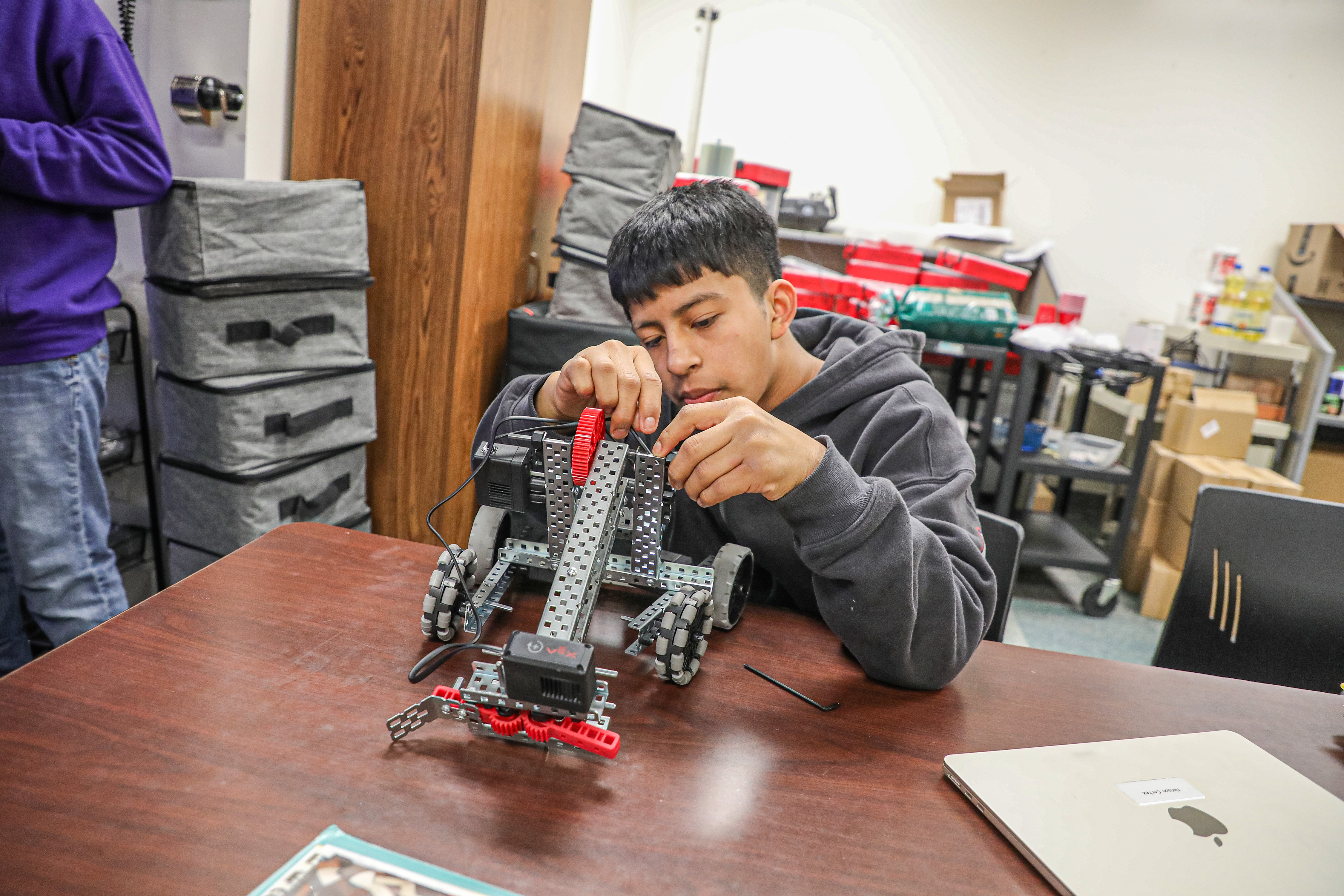
STEM and Robotics

Schuyler Community Schools is expanding opportunities for students who are ready to go further through advanced academics, STEM exploration, and career-focused learning from elementary through high school.

A key part of that work is the district's High Ability Learner (HAL) program, which serves students in grades 3–12 through enrichment and accelerated learning. Currently, 18 students in grades 3–5 qualify, with additional students at the middle and high school levels. At the high school, 96 students are enrolled in dual credit courses.

High Ability Learner Program

"All districts have students with a wide range of abilities," said Alicia Keairnes, who coordinates the HAL program. "Even when a district faces challenges, there are students achieving at very high levels, and those successes deserve recognition and support." At the elementary level, HAL students participate in enrichment activities such as Lego Education and career-based field trips.

STEM at the Middle School

At Schuyler Middle School, students are introduced to STEM coursework that emphasizes problem-solving and hands-on learning. STEM classes and activities, including robotics and engineering-based projects, allow students to apply math and science concepts in practical ways while building confidence and curiosity.

According to Samantha Ladwig, Director of Curriculum, Instruction, and Assessment, these opportunities are part of a broader effort to create clear academic pathways. "We want students to have access to challenge at every level," Ladwig said. "Advanced coursework and enrichment shouldn't be limited by assumptions about a district."

The middle school also offers Algebra I to eighth-grade students, allowing them to earn high school credit early.

High School Opportunities

At the high school, students can take dual credit courses both in person and online, with 96 students currently enrolled. High school principal Dr. Dave Cunningham said hands-on programs help students see the relevance of learning. "When students can build, design, and apply their knowledge, engagement increases," Cunningham said.

District leaders say these pathways are designed to ensure students at every level have opportunities to grow, be challenged, and prepare for what comes next.

Programas Académicos

Ampliando Caminos: Aprendizaje Avanzado para Cada Estudiante

STEM y Robótica

Schuyler Community Schools está ampliando las oportunidades para estudiantes que buscan mayores retos académicos y experiencias prácticas, desde la primaria hasta la preparatoria.

Una parte clave es el programa de Estudiantes de Alta Capacidad (HAL), que atiende a alumnos de los grados 3 a 12. Actualmente, 18 estudiantes de tercero a quinto grado califican, con participación adicional en secundaria y preparatoria. En la preparatoria, 96 estudiantes están inscritos en cursos de crédito universitario.

El Programa HAL

"Todos los distritos tienen estudiantes con diferentes niveles de habilidad," explicó Alicia Keairnes, coordinadora del programa HAL. "Incluso cuando un distrito enfrenta retos, siempre hay estudiantes con logros altos que merecen ser reconocidos y apoyados." En el nivel primario, los estudiantes HAL participan en actividades de enriquecimiento como Lego Education, aprendizaje basado en proyectos y excursiones educativas.

STEM en la Secundaria

En Schuyler Middle School, los estudiantes tienen acceso a cursos STEM que enfatizan el pensamiento crítico y el aprendizaje práctico. Clases y actividades como robótica y proyectos de ingeniería permiten a los alumnos aplicar conceptos de matemáticas y ciencias de manera concreta, fortaleciendo la curiosidad y la confianza académica.

"Queremos que los estudiantes tengan acceso al reto académico en cada etapa," dijo Samantha Ladwig, directora de Currículo, Instrucción y Evaluación. "Las oportunidades avanzadas no deben estar limitadas por suposiciones sobre el distrito." La secundaria también ofrece Álgebra I a los estudiantes de octavo grado, permitiéndoles obtener crédito de preparatoria de forma anticipada.

Oportunidades en la Preparatoria

En la preparatoria, los estudiantes pueden acceder a una amplia gama de cursos técnicos, STEM y de crédito dual. Actualmente, 96 estudiantes están inscritos en clases de crédito universitario, tanto presenciales como en línea. El director Dr. Dave Cunningham señaló que estas experiencias ayudan a los estudiantes a ver el valor del aprendizaje. "Cuando los estudiantes pueden construir, diseñar y aplicar lo que saben, el compromiso aumenta," dijo Cunningham.

En conjunto, estos programas reflejan una meta clara: asegurar que todos los estudiantes — en todos los niveles — tengan oportunidades reales para crecer, ser desafiados y prepararse para su futuro.

By the Numbers

District Data 2024–2025

Student, teacher, and financial data for Schuyler Community Schools

View Full Nebraska Education Profile ↗
En Números

Datos del Distrito 2024–2025

Datos de estudiantes, maestros y finanzas de Schuyler Community Schools

Ver Perfil Completo de Nebraska Education ↗
District EnrollmentMatrícula del Distrito
—
Current enrollmentMatrícula actual
2024–25
—
Peak enrollmentMatrícula máxima
2019–20
—
Change since peakCambio desde el máximo
studentsestudiantes
Students & StaffEstudiantes y Personal
—
Total teachers (FTE)Total de docentes (FTE)
Average 12 years teaching experience · State avg: 14 years
50% hold a master's degree · State avg: 59%
Promedio de 12 años de experiencia · Promedio estatal: 14 años
50% tienen maestría · Promedio estatal: 59%
—
English learnersEstudiantes de inglés
10%
State avgProm. estatal
■ SchuylerSchuyler    ■ StateEstado
—
Free / reduced lunchAlmuerzo gratuito/reducido
50%
State avgProm. estatal
■ SchuylerSchuyler    ■ StateEstado
—
Special educationEducación especial
17%
State avgProm. estatal
■ SchuylerSchuyler    ■ StateEstado
—
High-ability learnersAlumnos de alta capacidad
13%
State avgProm. estatal
■ SchuylerSchuyler    ■ StateEstado
FinancesFinanzas

Total RevenueIngresos Totales

$29,077,446
$29M
LocalLocal$12.2M
State (other)Estado (otro)$8.5M
FederalFederal$4.1M
TEEOSATEEOSA$3.9M
County / otherCondado / otro$0.4M

Total ExpendituresGastos Totales

$25,585,267
$25.6M
InstructionInstrucción$15.0M
MaintenanceMantenimiento$3.3M
Principal officeOf. del director$1.5M
Federal programsProg. federales$1.4M
Support & otherApoyo y otros$4.4M
Board of Education

Schuyler Community Schools

"We are honored to present this annual report to the Schuyler community. We hope you read it with the same pride we feel in the work happening across our schools. We know we still have work to do. But as you'll see in these pages, we are taking that work head-on — with focus, accountability, and a belief in every student. Like Warriors, we move forward together."
— Richard Brabec, President, Schuyler Community Schools Board of Education
Junta de Educación

Schuyler Community Schools

"Nos sentimos honrados de presentar este informe anual a la comunidad de Schuyler. Esperamos que lo lean con el mismo orgullo que sentimos nosotros por el trabajo que se está llevando a cabo en nuestras escuelas. Sabemos que aún tenemos trabajo por hacer. Pero, como verán en estas páginas, estamos enfrentando ese trabajo de frente — con enfoque, responsabilidad y una firme creencia en cada estudiante. Como Warriors, avanzamos juntos."
— Richard Brabec, Presidente, Junta de Educación de Schuyler Community Schools
Richard BrabecPresidentPresidente
Brian VavricekVice PresidentVicepresidente
Paul PleskachSecretarySecretario
Dr. Renee SayerNASB DelegateDelegada de NASB
Virginia SemeradBoard MemberMiembro
Amanda JedlickaTreasurerTesorera